

NanToo Blog
RSS feedClear explanations of the ideas behind NanToo tools, web development, design, and practical everyday technology.
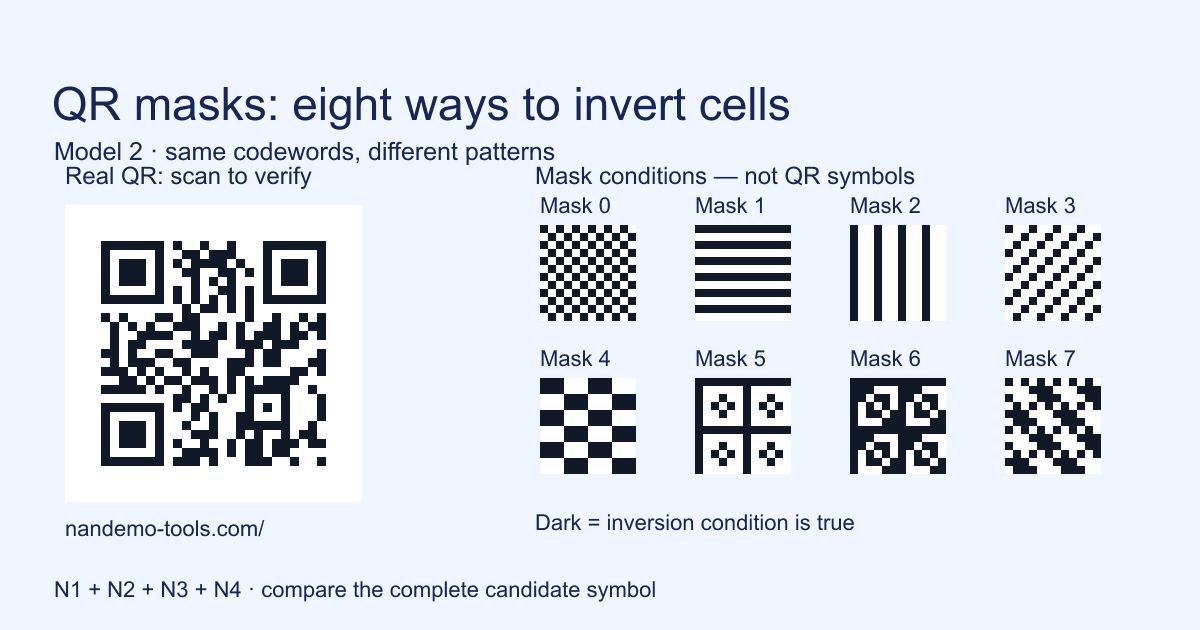
Why QR Codes Look Different: Eight Masks and Penalty Scores
Explore QR Code Model 2 masks, zero-based coordinates and N1–N4 scoring examples. Learn why the same URL can produce different patterns and what masking cannot fix.
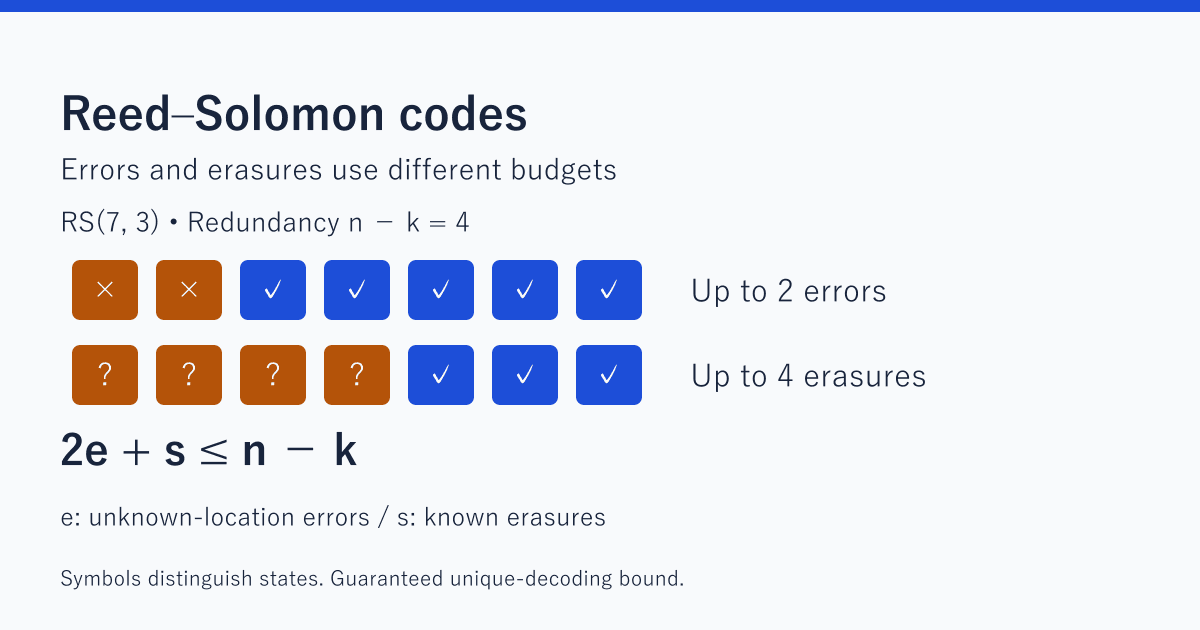
Reed–Solomon Codes Explained: Errors, Erasures, QR Codes and Voyager
Understand Reed–Solomon error correction with a worked finite-field example, the 2e+s≤n−k bound, and practical limits in QR codes, optical discs and space links.
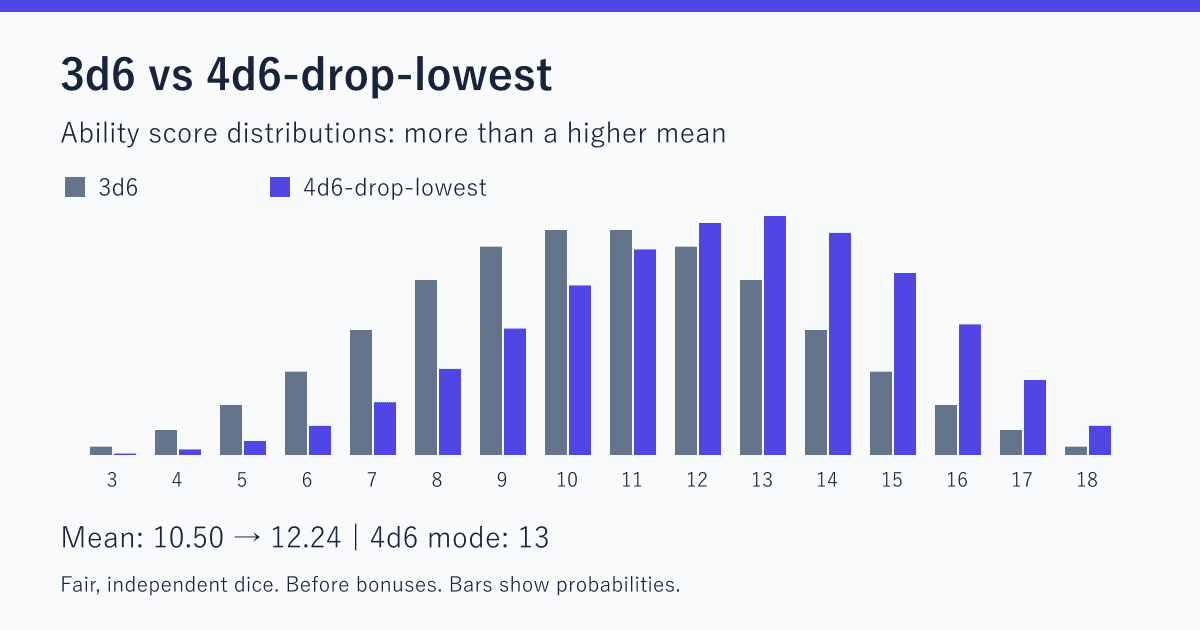
3d6 vs. 4d6 Drop Lowest: D&D Ability Score Probabilities Explained
Compare 3d6 and 4d6 drop lowest using exact counts: averages, odds of rolling 18, ability modifiers, point buy, and percentiles for six-score totals.
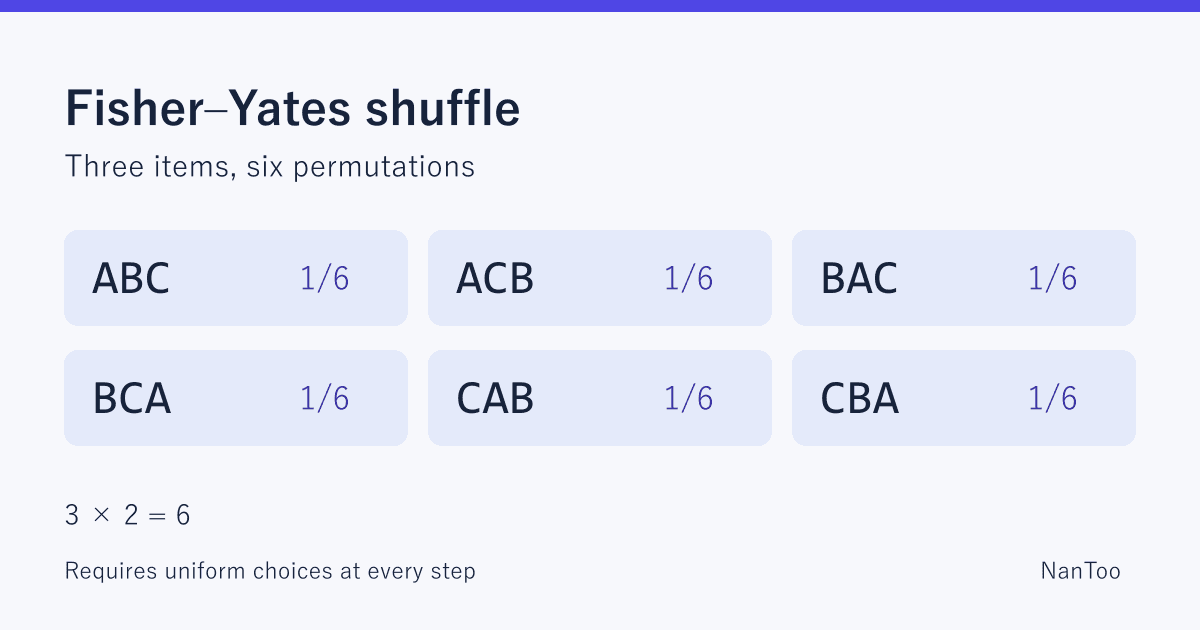
Fisher–Yates Shuffle: Uniform Permutations and Common JavaScript Mistakes
Understand why Fisher–Yates works, avoid random sort comparators and modulo bias, and test a JavaScript shuffle with Web Crypto and explicit failure handling.
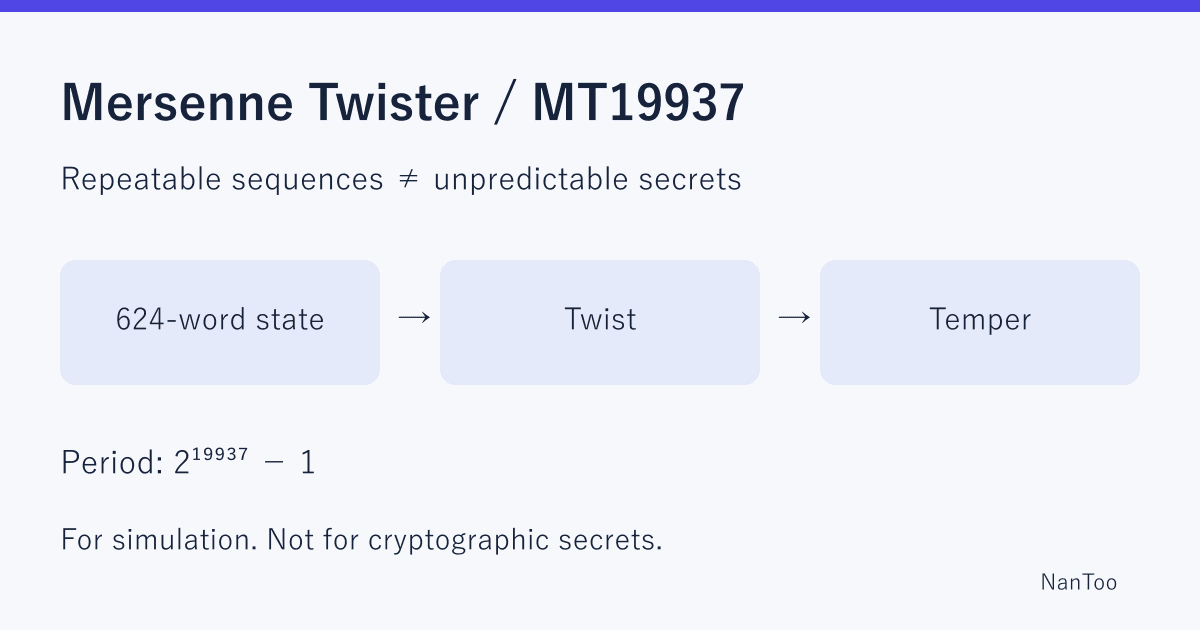
Mersenne Twister (MT19937): Period, Reproducibility, and Security Limits
Learn how MT19937’s period, 624-word state, and 623-dimensional equidistribution differ. Run a JavaScript example and understand why MT is unsafe for secrets.
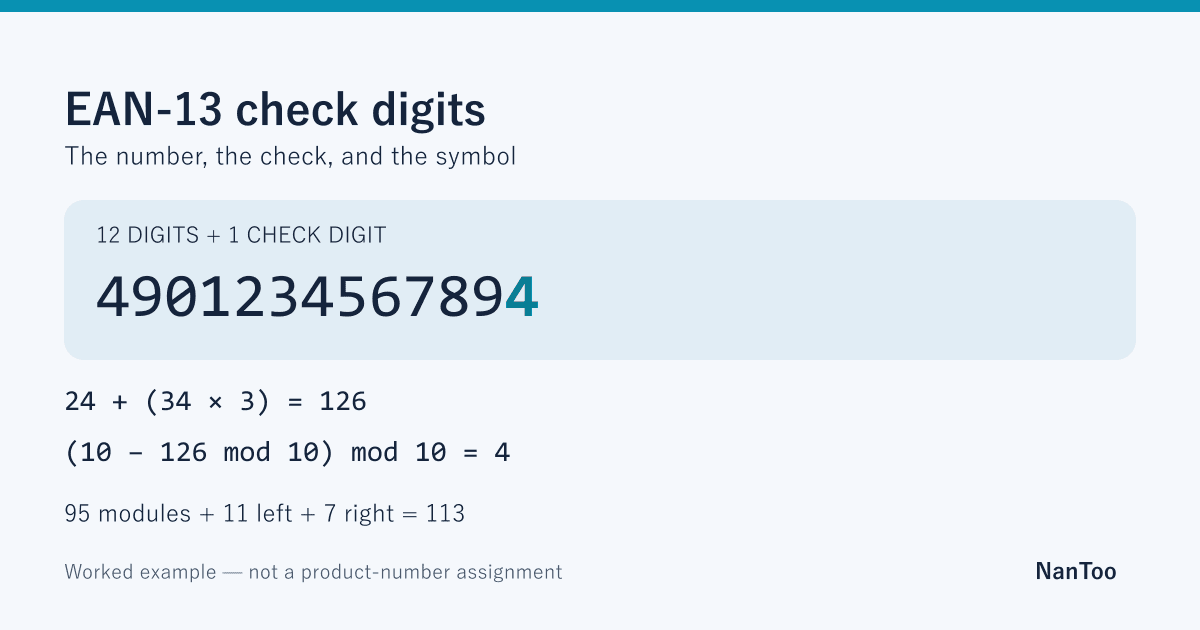
EAN-13 Barcode Math: Check Digits, Parity, and Japan's JAN Codes
Calculate an EAN-13 check digit, see which digit swaps it misses, and understand the 95-module symbol, quiet zones, UPC-A compatibility, and Japan's JAN system.
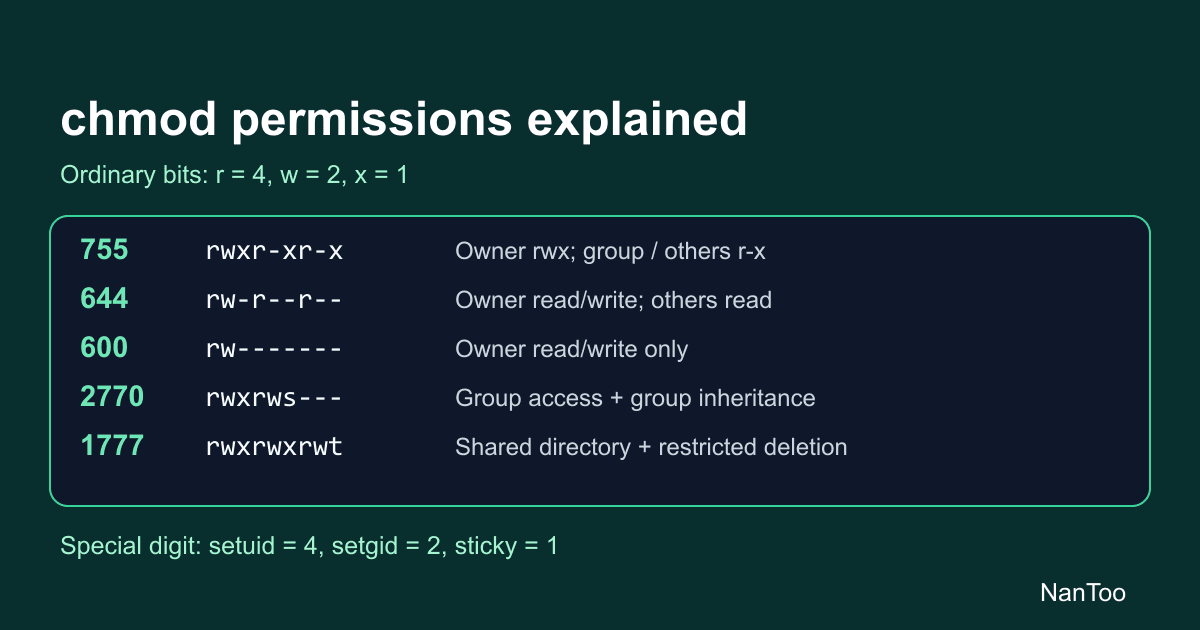
chmod 755, 644, and 600 Explained: setuid, setgid, and the Sticky Bit
Understand octal permissions, rwx, file versus directory access, umask, special bits, SSH private-key permissions, and Git's executable flag.
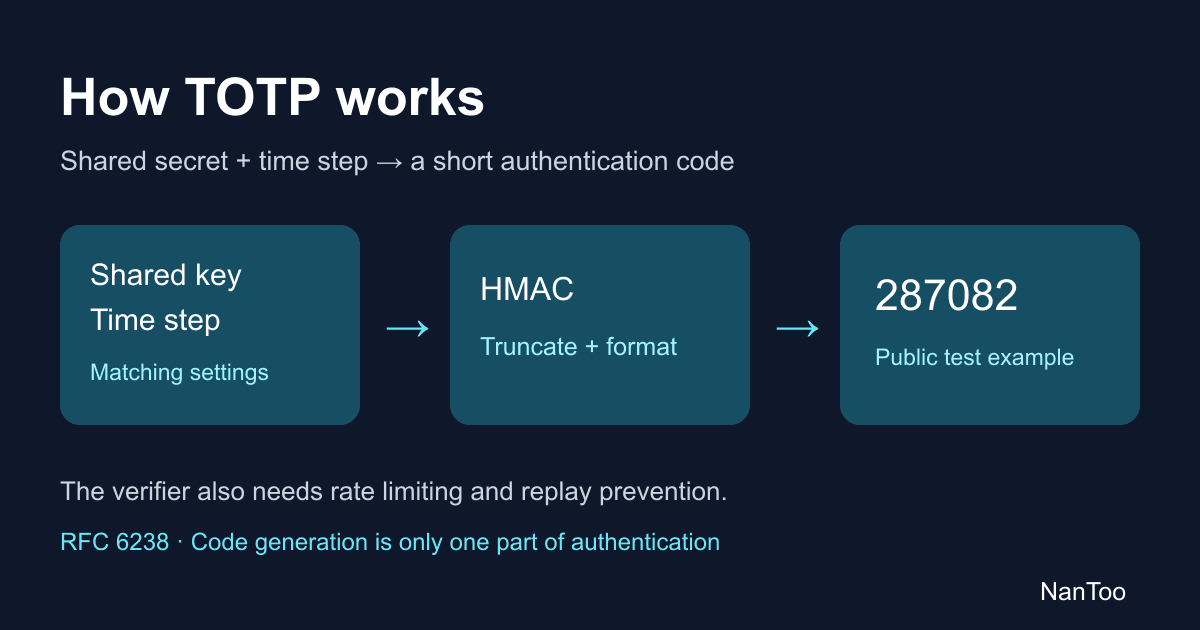
How TOTP Works: Shared Secrets, 30-Second Codes, and Clock Drift
Explore RFC 6238 with a runnable TOTP example: time steps, leading zeros, clock drift, replay prevention, Base32 enrollment keys, and differences from passkeys.
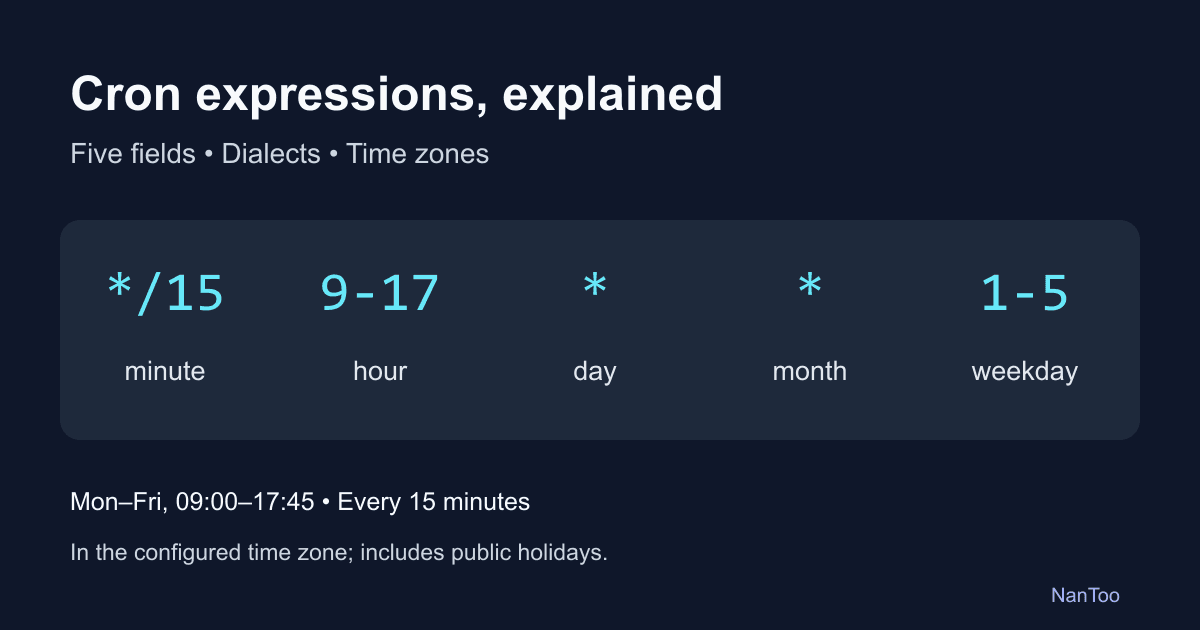
Cron Expressions Explained: Five Fields, Dialects, and Time Zones
Learn cron syntax, day-of-month versus weekday matching, step boundaries, DST behavior, and practical crontab examples across common scheduler dialects.
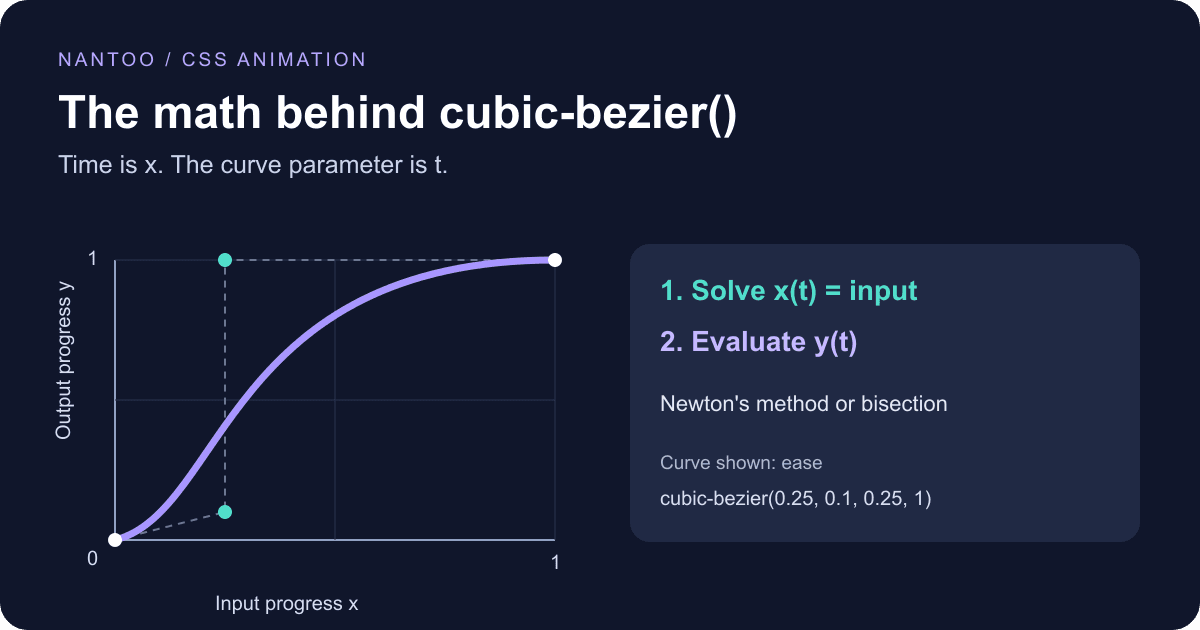
CSS cubic-bezier() Math: Control Points, Inversion, and Newton's Method
Why CSS cubic-bezier() restricts x control points to 0–1, how time maps to progress, and how Newton's method, bisection, and de Casteljau evaluation work.
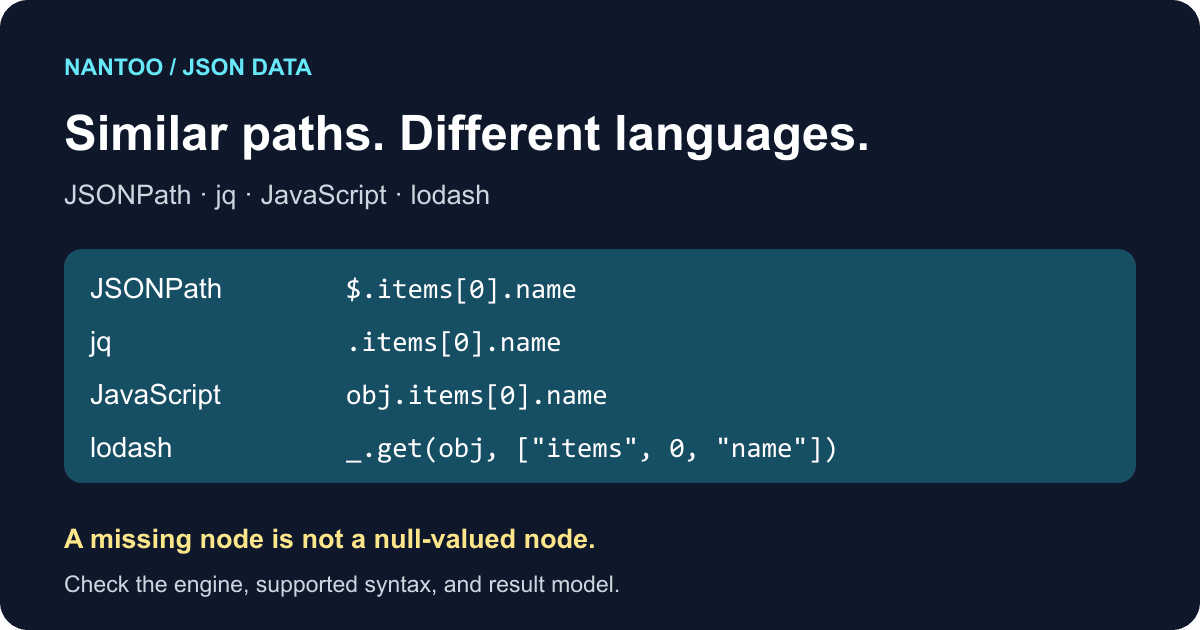
JSONPath vs jq and JavaScript: Why Similar Paths Behave Differently
Compare RFC 9535 JSONPath with jq, JavaScript, and lodash paths. Learn how roots, filters, missing values, null, ordering, and duplicate results differ.
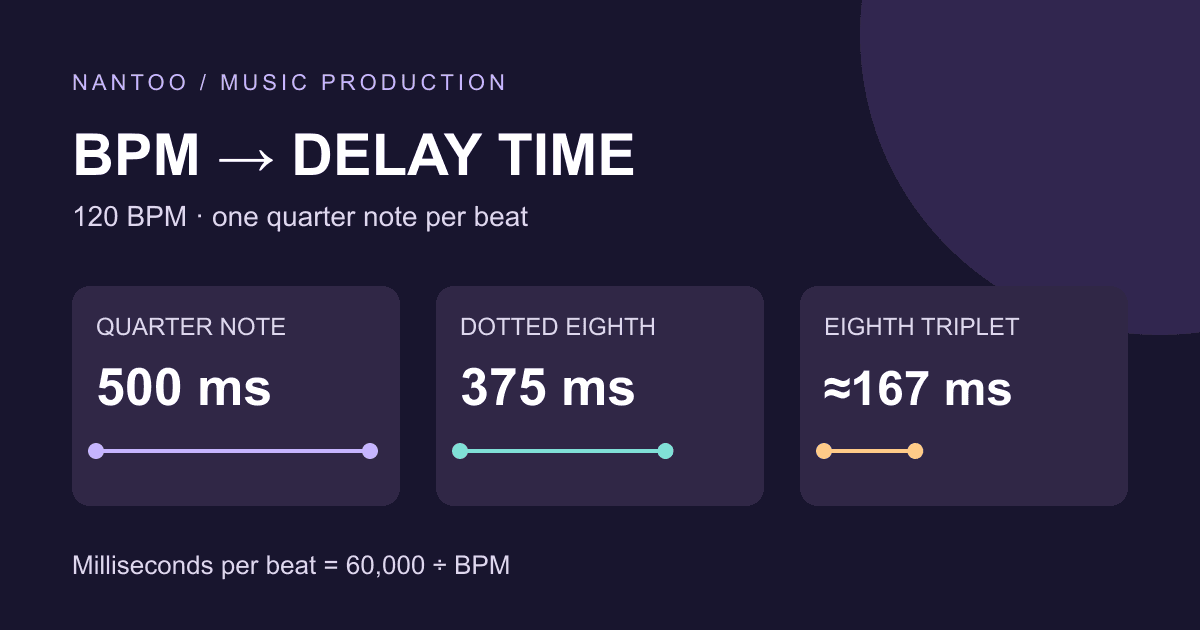
BPM to Delay Time: Note Values, Tap Tempo, and LFO Rates
Convert BPM to milliseconds for straight, dotted, and triplet notes. Understand tempo-synced delay, mean versus median tap tempo, and LFO cycle rates.
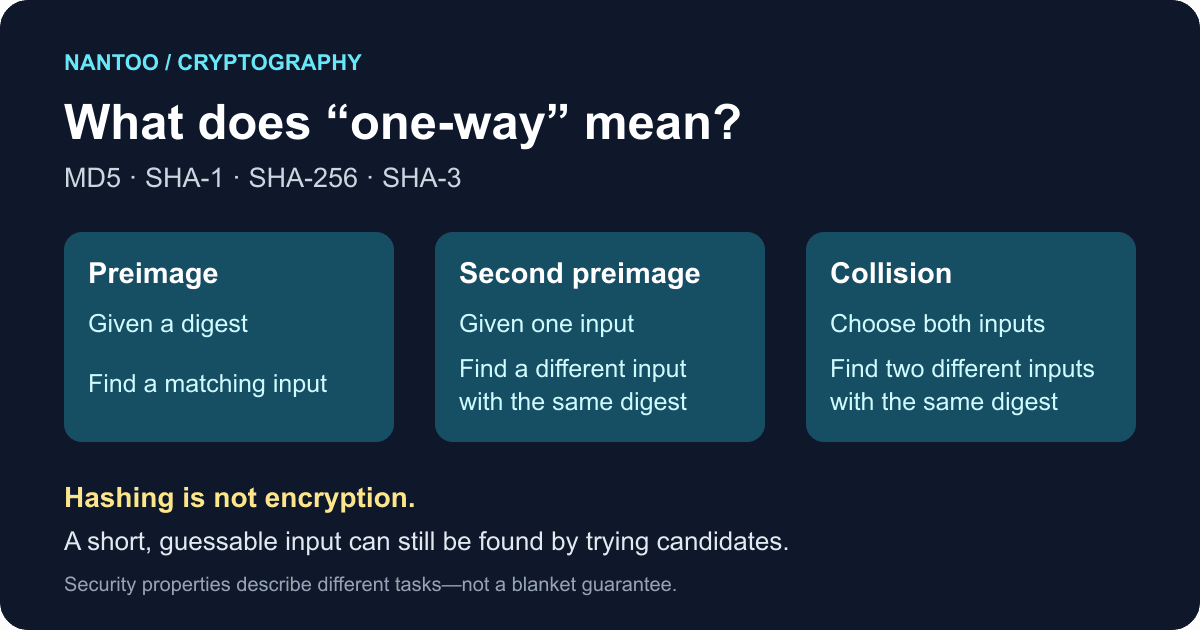
Hash Functions Explained: MD5, SHA-256, and One-Way Security
Learn how hashing differs from encryption, what collisions and preimages mean, why short inputs can be guessed, and how to compare UTF-8 text hashes correctly.
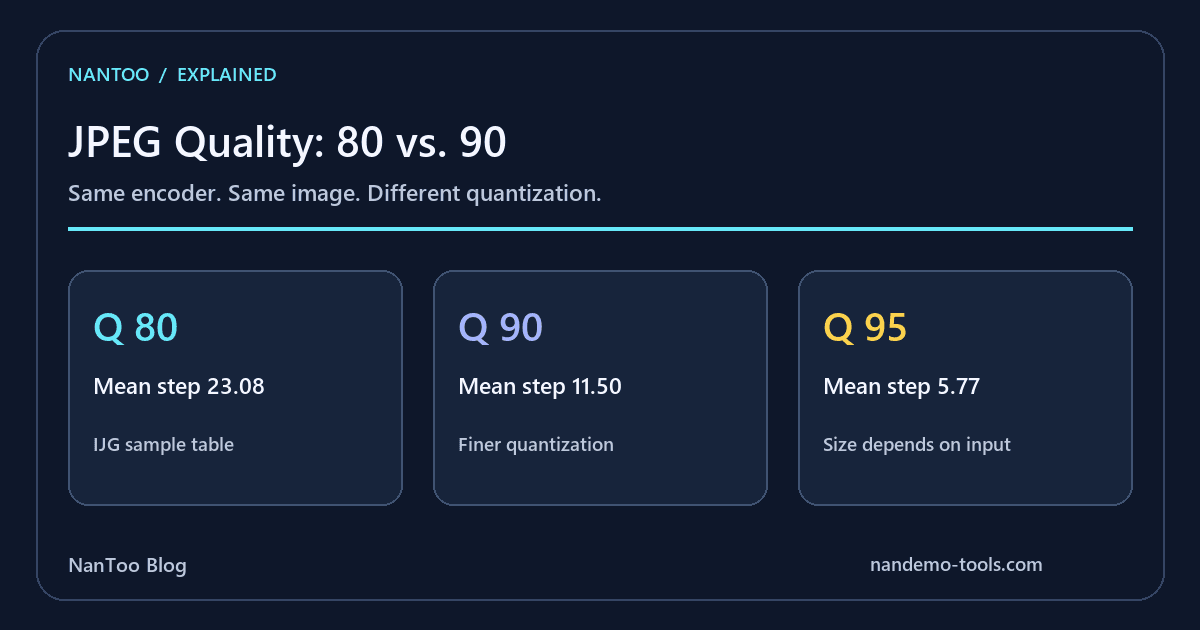
JPEG Quality 80 vs. 90: DCT, Quantization, and File Size Explained
Learn what JPEG quality settings change, why encoder settings matter, and how DCT, quantization, and chroma subsampling affect photos, text, and file size.
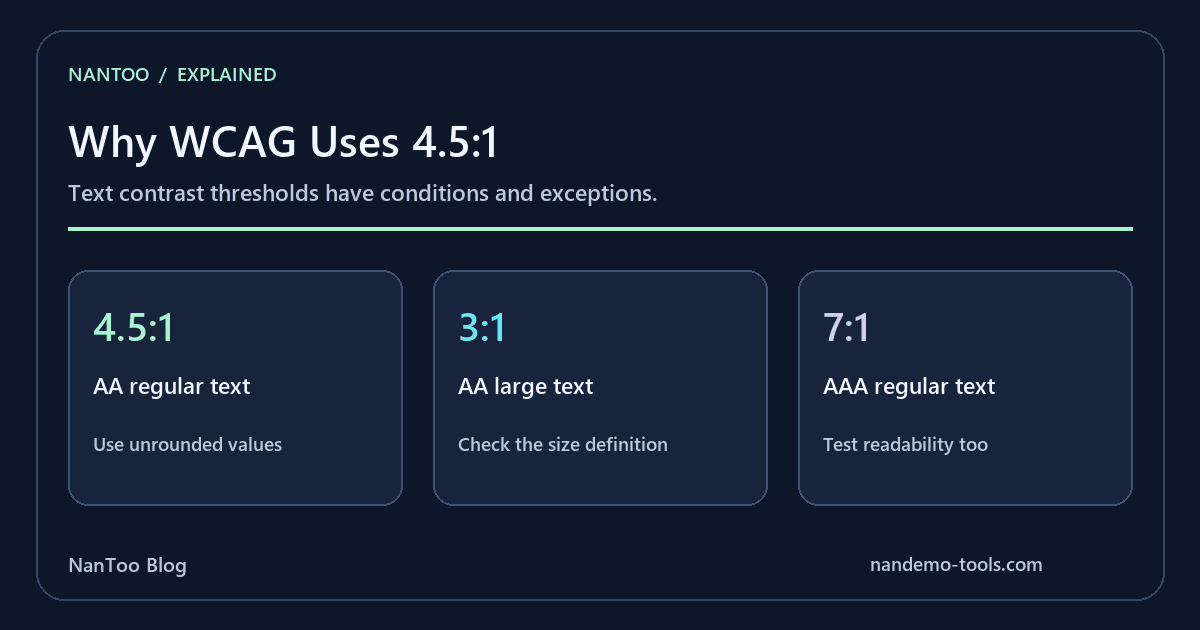
Why WCAG Uses a 4.5:1 Contrast Ratio: The Formula and Its Limits
Understand WCAG contrast ratios, the current sRGB formula, AA and AAA thresholds, text-size exceptions, and why APCA is separate from WCAG 2.2 conformance.
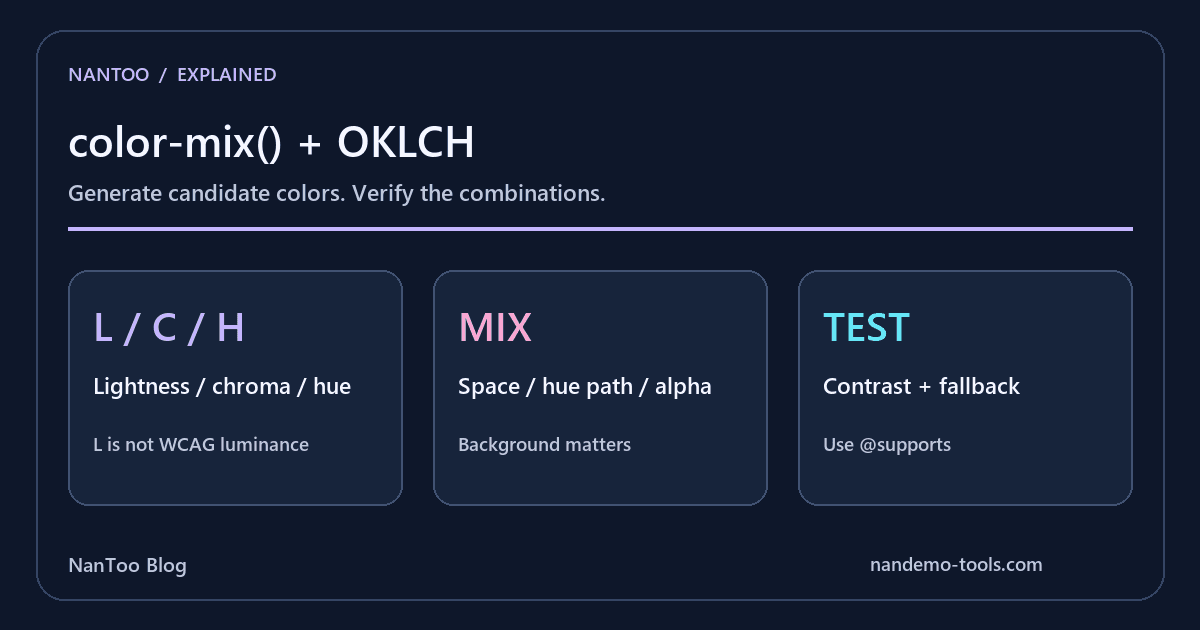
CSS color-mix() and OKLCH: Build Brand Color Variants with Tested Fallbacks
Create hover, active, background, and border colors with color-mix() and OKLCH. Understand hue paths, transparency, browser support, and safe CSS variable fallbacks.
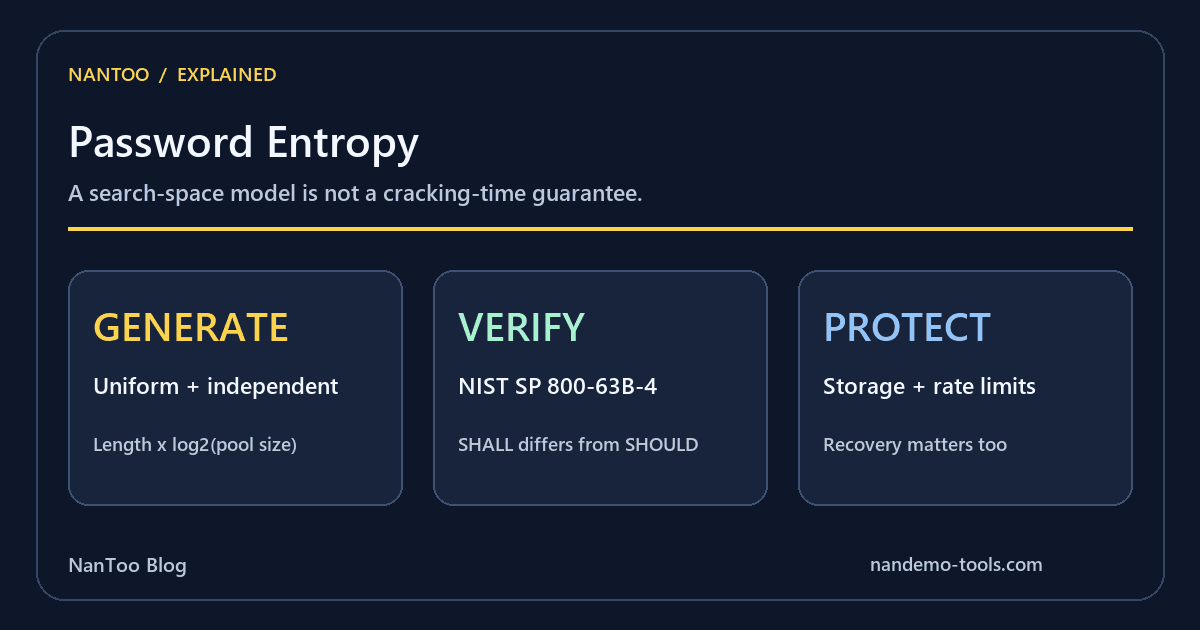
Password Entropy and NIST SP 800-63B-4: What the Numbers Really Mean
Separate random-password search spaces from human choices and real authentication security. Review entropy calculations, NIST requirements, passphrases, and attack conditions.
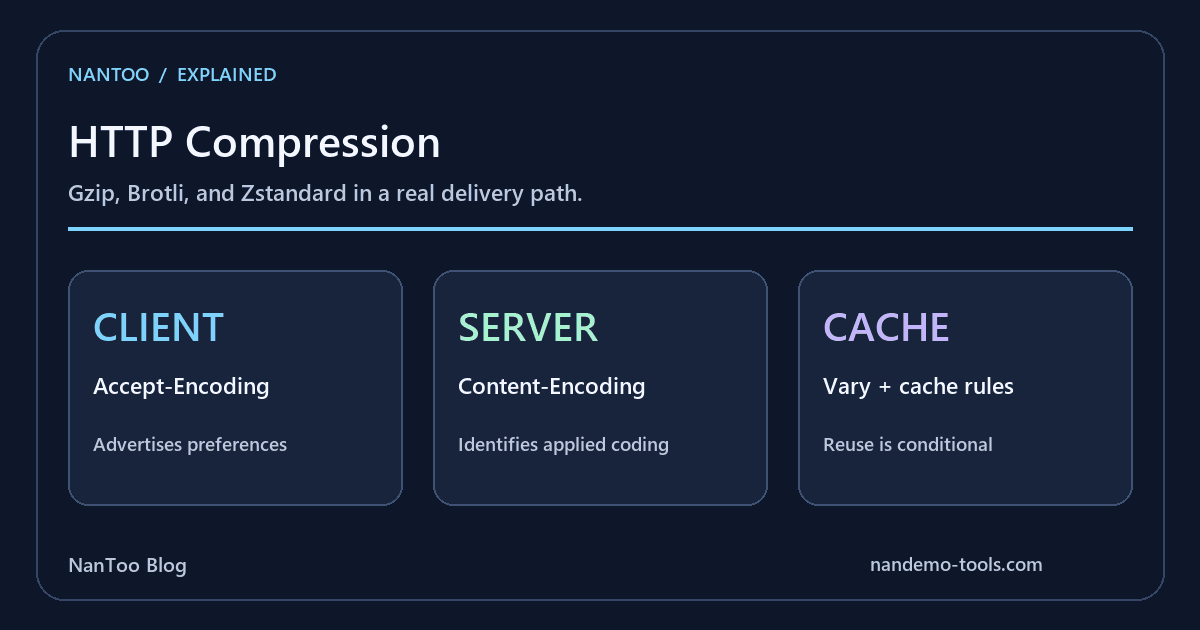
Gzip vs. Brotli vs. Zstandard: HTTP Content-Encoding in Practice
Compare HTTP compression choices, Accept-Encoding negotiation, zstd's window limit, and browser, CDN, and origin-server conditions before changing a delivery setup.
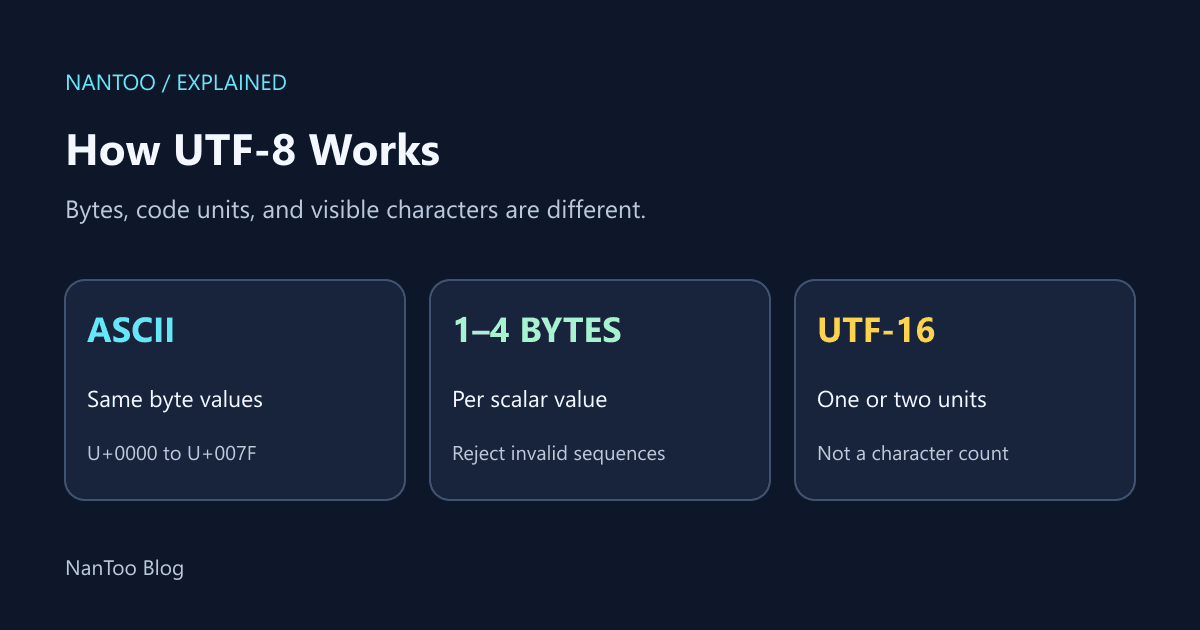
How UTF-8 Works: Its Origins, Byte Length, and UTF-16 Compared
Understand UTF-8 through its 1992 origins, ASCII compatibility, one-to-four-byte structure, invalid sequences, and the difference between bytes and characters.
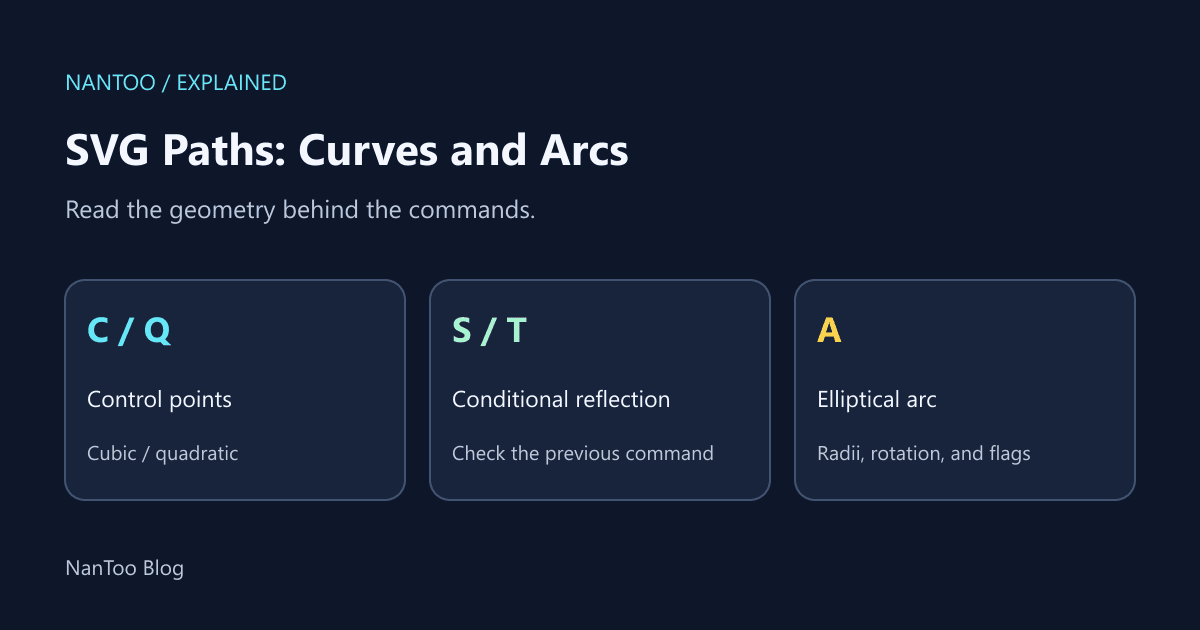
SVG Paths Explained: Bézier Curves, Smooth Joins, and Elliptical Arcs
Read SVG path commands, evaluate Bézier curves, understand S and T, and handle elliptical-arc flags, radius correction, and circle approximations.

QR Code Error Correction: Choosing L, M, Q, or H
Compare QR error-correction levels, version-one capacity, and logo-overlay risks. Learn why codeword recovery percentages are not safe image-area allowances.
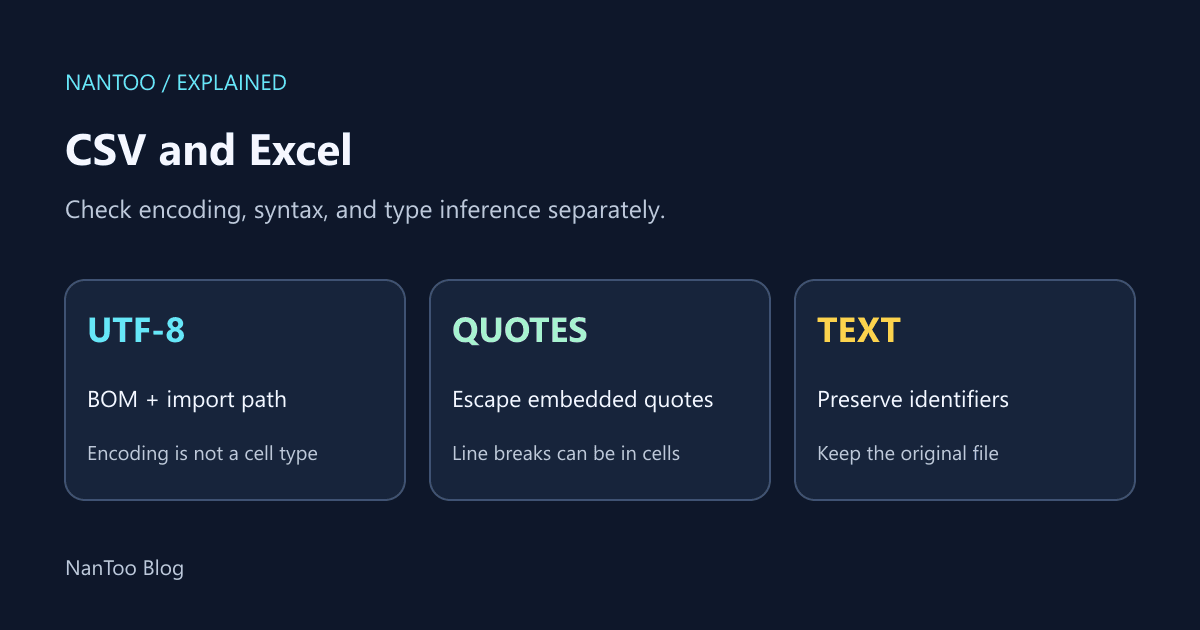
CSV and Excel: UTF-8, Quoting, Line Breaks, and Lost Leading Zeros
Diagnose CSV problems by separating encoding, syntax, and spreadsheet type inference. Understand RFC 4180, UTF-8 BOMs, text imports, and formula risks.
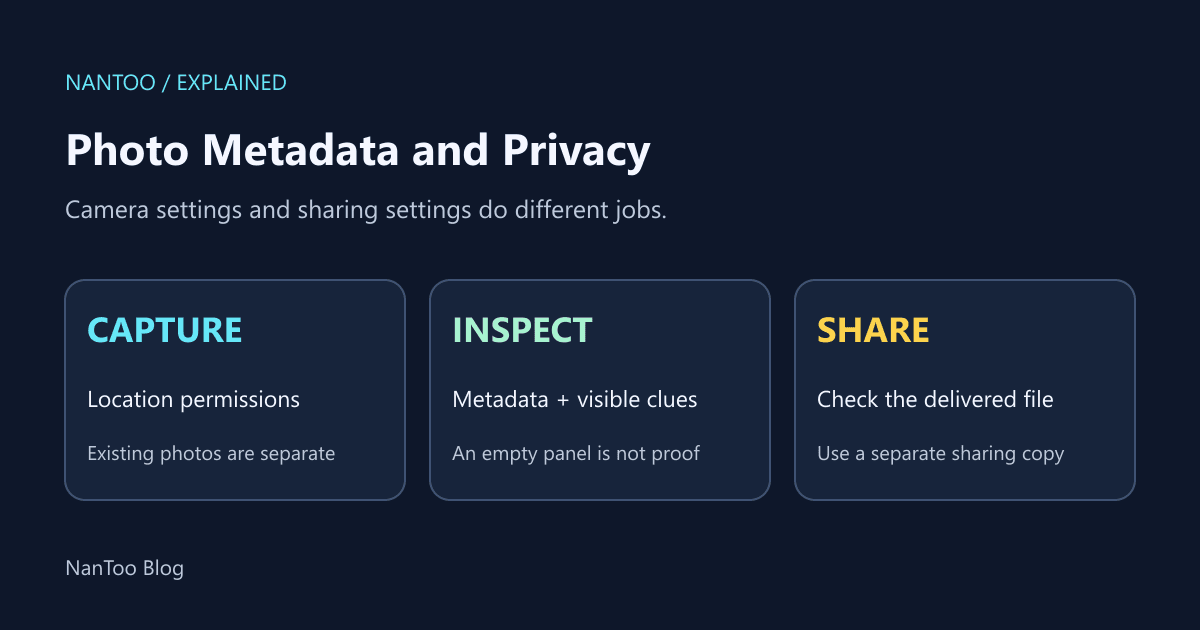
Photo EXIF and GPS Privacy: What to Check Before Sharing
Understand location metadata in photos, the limits of GPS precision, and the difference between camera permissions, sharing settings, and removing data from a file.
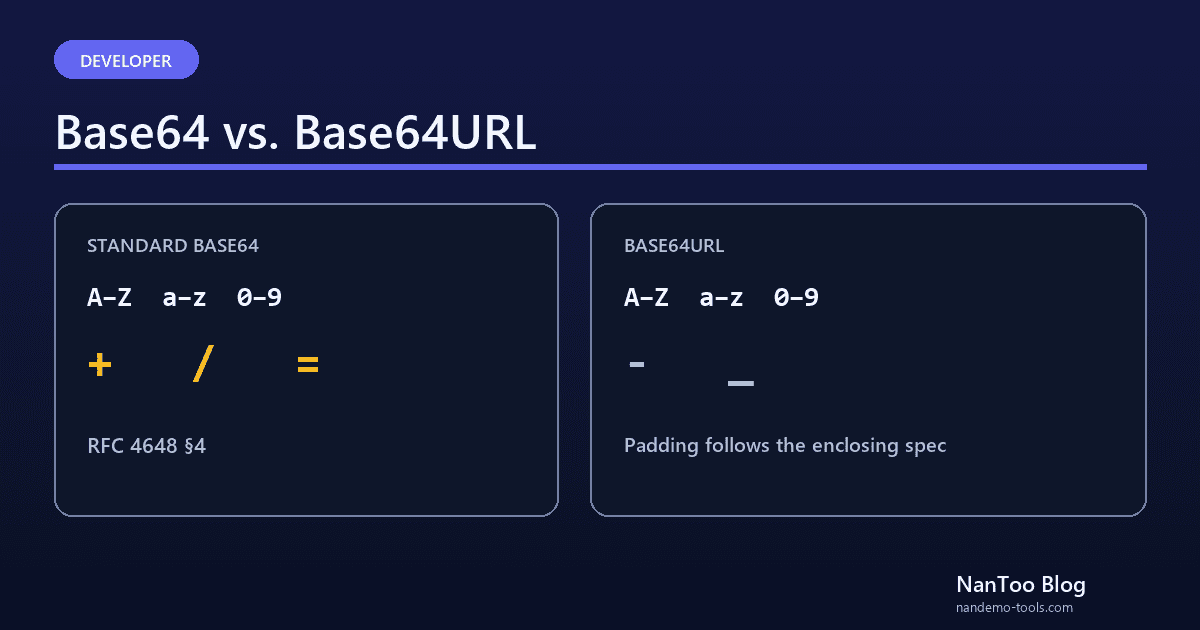
Base64 vs. Base64URL: Padding, URLs, and RFC 4648 Pitfalls
Learn how Base64 and Base64URL differ, when + becomes a space, when padding may be omitted, and how MIME line wrapping affects encoded data.